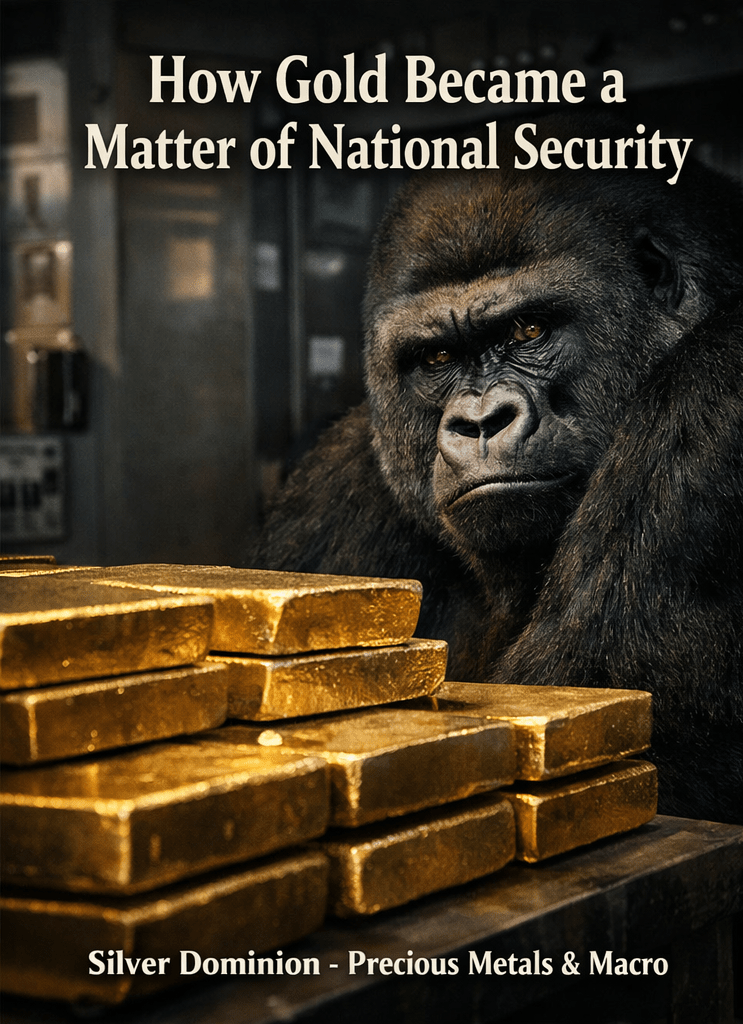
I’ve always had the feeling that gold carries far more significance than most people give it credit for. Not just as a hedge against inflation or “something for the portfolio,” but as something that could one day take on a completely different role.
For a long time, though, it seemed like nothing fundamental was happening. Gold was more of a symbol of calm and stability, not something that would move the world.
But the more you follow what’s been happening in recent years, the clearer it becomes that this view no longer holds.
Gold has quietly shifted from an investment to a tool of power. And this shift isn’t obvious at first glance. It’s not happening through big announcements or dramatic headlines. It’s happening through concrete actions by states that, when put together, form a picture that’s hard to ignore.
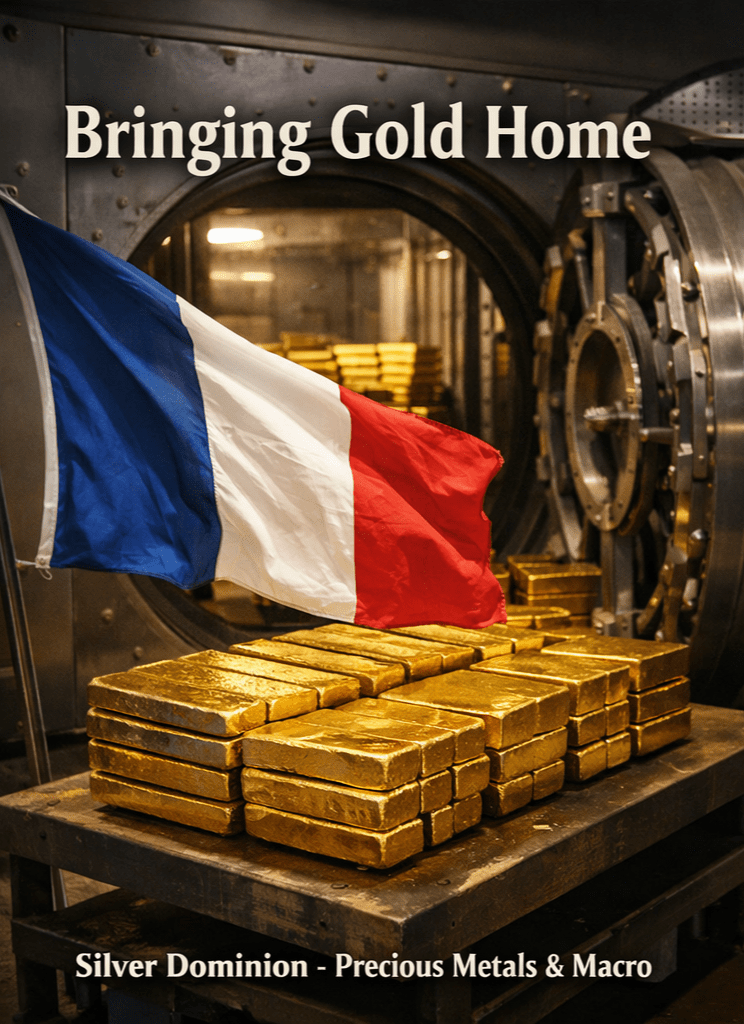
One of the most striking examples is France. This year, it completed the relocation of all its gold back to its own territory—2,437 tonnes in total. The goal wasn’t to have more gold, but to have it physically under control. Within a few months, it sold 129 tonnes of older bars stored in the United States and replaced them with new ones that meet current market standards. The result? The same amount of gold, but under a different regime—and a profit of €12.8 billion.
At first glance, this may look like portfolio optimization. In reality, it’s much more than that. It’s a shift in approach.
After 2022, when approximately $300 billion of Russian reserves were frozen, countries began to realize something they had previously taken for granted—that assets held abroad are not automatically safe. And more importantly, that they may not be accessible in a crisis.
And that’s a fundamental problem.
Suddenly, it’s no longer just about how much reserves you have, but where you have them—and whether you can actually use them when needed. This marks a shift from economics to sovereignty.
And it’s precisely in this context that the actions of central banks start to make sense.
In 2025 alone, they purchased 863 tonnes of gold. And that’s not an exception. Similar high numbers have been repeating for several years. This means it’s not a reaction to a single event, but a long-term strategic shift. Moreover, it’s not just a few countries—more and more are buying, creating steady and broad demand.
Gold is thus returning to the role it historically played—as a foundation of trust, not just a reserve asset.
China’s behavior fits into this picture as well. Officially, it holds over 2,300 tonnes of gold while gradually reducing its exposure to U.S. Treasury bonds. Put simply, it makes sense. Gold is one of the few assets that cannot be frozen, sanctioned, or otherwise restricted.
At the same time, estimates increasingly suggest that China’s actual reserves may be significantly higher than officially reported. If that’s true, it means China is building its position far more systematically and quietly than it appears at first glance. And that’s exactly the kind of move that has long-term consequences.
And that’s when the whole picture starts to come together.
It’s no longer just about states. This shift is also being recognized by major players in the markets. For example, Union Bancaire Privée (UBP), a Swiss bank managing around $233 billion, is returning to gold after previously reducing its exposure. Not long ago, it cut gold allocation in its portfolios from about 10% to 3% due to liquidity pressures and market volatility. Now, it is gradually increasing it again—to around 6%—while clearly stating that the long-term outlook has not changed.
That’s important. Because it shows that short-term fluctuations are not the main story.
And perhaps even more interesting is their expectation. Despite a decline in gold prices due to geopolitical tensions and macroeconomic factors, they still believe gold could reach as much as $6,000 per ounce this year.
That’s not a coincidence. It’s a consequence of what’s happening beneath the surface.
Honestly, the more I connect these dots, the more it feels like the biggest changes are happening precisely when no one is really talking about them.
When investors need liquidity, they sell even gold—that’s why short-term declines occur. But as soon as conditions stabilize, capital flows back. For example, gold ETFs, after significant outflows in March, recorded inflows again in April. This shows that interest in gold hasn’t disappeared—it’s just reacting to conditions.
And then there’s one more thing that often gets overlooked. The problem today isn’t mining gold. The problem is the entire system around it.
Refineries, logistics, trading hubs—these are the critical points through which gold moves. And these points are vulnerable. Any disruption in transport, the emergence of conflict, or operational restrictions immediately shows up—not just in price, but in the availability of physical gold.
And that’s when you realize that gold is not just a commodity.
It’s infrastructure.
When you connect all of this, it starts to make very clear sense. States are bringing gold home to maintain full control over it. Central banks are buying it in hundreds of tonnes per year. Major economies are replacing part of their reserves with it—reserves that may be politically vulnerable. And financial institutions are gradually restoring it as a key component of portfolios.
This is not a coincidence. This is a change in the rules.
Gold today is not just an investment. It’s insurance against a world where the rules can change overnight. It’s something that works even when other systems stop functioning the way we’re used to.
And the more I look at it, the more I realize this isn’t something that’s yet to come.
It’s already happening.
Most people just don’t see it yet.
 Silver Dominion
Leave a comment