Anyone who has ever started stacking silver eventually asks the same question: what kind of silver should I actually buy?
The market is full of tempting offers—shiny medals, “historical” pieces, colorful limited editions and fancy investment products. But not everything that sparkles is a good choice for a stacker.
As a stacker, I’m looking for the most metal for the lowest possible premium, strong liquidity, and guaranteed purity. And that’s exactly why there are several forms of silver I deliberately avoid.
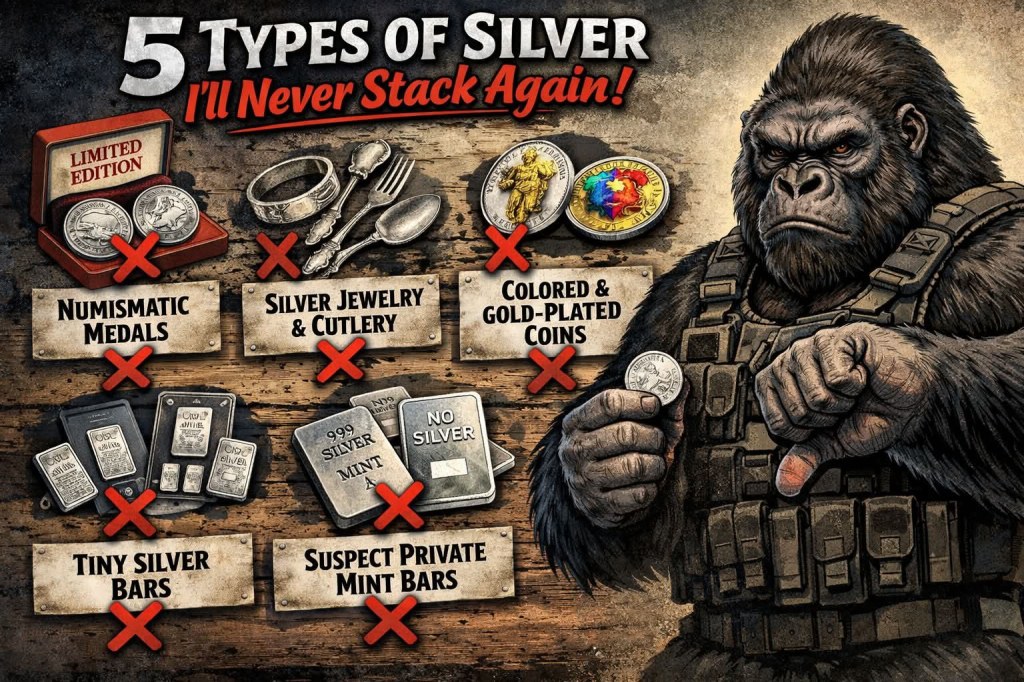
1️⃣ Numismatic and Pseudo-Numismatic Medals
Various commemorative medals, usually made by private companies, with no legal-tender status.
❌ extremely high premiums
❌ poor liquidity
❌ questionable authenticity
You pay far more than the metal is worth—and when you want to sell, hardly anyone wants them.
2️⃣ Silver Jewelry and Cutlery
Rings, bracelets, antique cutlery… nice souvenirs, but terrible for stacking.
❌ lower purity
❌ difficult resale
❌ risk of fakes
Most of the time they are bought only as scrap metal.
3️⃣ Colored and Gold-Plated Investment Coins
Standard bullion coins “enhanced” with paint, coating, or plating.
❌ unnecessary premium
❌ weaker liquidity
❌ risk of surface damage
They look attractive, but financially make little sense for a stacker.
4️⃣ Ultra-Small Weights (1–2 grams)
Tiny bars or miniature coins, often in luxury packaging.
❌ extremely high premium per gram
❌ impractical for meaningful value storage
❌ low demand when selling
Nice gimmick, bad economics.
5️⃣ No-Name Bars and Suspicious Private Mint Products
Silver from unknown manufacturers without certification.
❌ high counterfeit risk
❌ hard to verify purity
❌ low trust at resale
They may look cool, but the risk isn’t worth it.
So What Do I Buy Instead?
I stick to standard bullion coins like Maple Leaf, Philharmoniker, Krugerrand, and occasionally bars from reputable refiners. They offer reliability, liquidity, and reasonable premiums.
 Silver Dominion
Leave a comment